Building a veranda over decking: post fixing and the 3 checks that decide
 Save
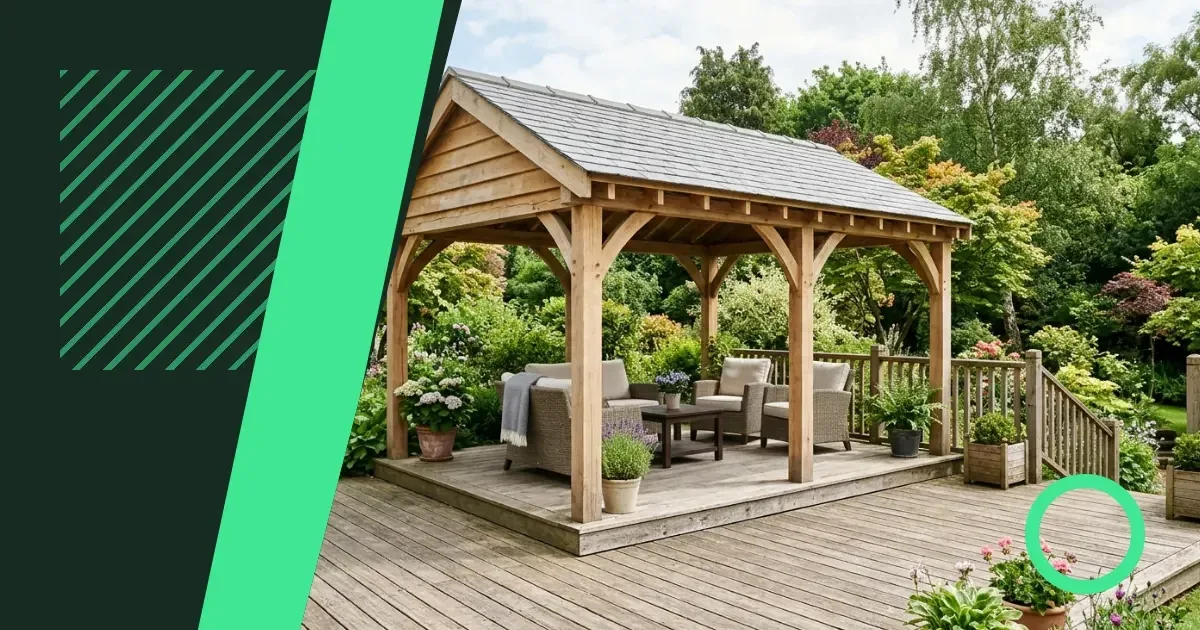
You can build a veranda on decking when the posts reach through to solid ground beneath. The deck surface itself won't carry the load — posts need footings or a concrete base below. Blakesleys covers the structural checks that matter, how to fix posts without damaging the deck, and when reinforcement is needed.
Load path: where the weight goes
A veranda roof, frame and any snow or wind load transfer down through the posts. Decking boards and joists aren't designed to carry that weight vertically. Posts must bypass the deck structure and rest on independent footings or a concrete pad underneath.
If your deck sits on a concrete patio, posts can bear directly on the concrete through the deck boards. Where the deck is raised and sits on its own posts above ground, veranda posts need their own footings dug alongside or between the existing deck supports.
Raised decks
A raised deck leaves a gap between the boards and the ground. Veranda posts go through that gap to footings below. You'll cut openings in the deck boards where posts land, then seal those cuts against water once the posts are in place.
Ground-level decks
Decking laid close to the ground often sits on a shallow bed of gravel or sand. Posts still need proper footings — either concrete pads cast below the deck height or post shoes fixed into existing hard standing if there is one.
Structural checks before you start
Three things decide whether your deck can accommodate veranda posts and what work is needed.
Joist direction and spacing
Decking joists run one way. Posts should land between joists wherever possible so you're only cutting boards, not structural framing. Measure joist spacing — closer spacing gives you more options for post positions without hitting a joist.
Where a post must land on a joist, you'll need to sister a new joist alongside the cut section to restore support for the deck boards either side.
Ground conditions underneath
Lift a board or look through gaps to see what's below. Soil lets you dig post holes. Concrete or paving means you'll fix posts with anchor bolts or post shoes drilled and plugged into the hard surface. Gravel or hardcore can be dug out to reach soil, or you can cast small footings within the gravel bed.
Deck age and condition
An old or soft deck won't cope with the extra cuts and foot traffic that come with building above it. Check for rot, loose boards or sagging joists. Repair or replace damaged sections before you add a veranda. Cutting into compromised timber accelerates deterioration.
Post fixing methods
The ground under your deck decides how posts are anchored.
Concrete footings
Dig through or around the deck to cast footings below frost depth. Each post sits on a footing and is held vertical with a post shoe or bolted bracket. This is the strongest option and works for any veranda size.
Post shoes on existing concrete
Where decking sits over a concrete patio, bolt post shoes directly to the concrete through the deck boards. Mark post positions, cut the boards, drill into the concrete and fix with expanding anchors or resin fixings. The shoe raises the post base clear of the deck surface.
Ground spikes
Driven steel spikes work in firm soil for smaller verandas. The spike is hammered into the ground through a cut opening in the deck, and the post slots into the square socket on top. Less disruption to the deck, but limited to lighter structures and not suitable for sandy or loose soil.
Cutting the deck without damage
- Mark post positions on the deck surface, checking they miss joists where possible.
- Drill a pilot hole at each corner of the cutout, then cut between the holes with a jigsaw set to the board thickness.
- Lift out the cut section and check the space below is clear for the post or the digging tool.
- Seal cut edges with wood preservative or end-grain sealer before the post goes in.
- Fit the post, then trim any gap between post and deck board with a thin flashing or flexible sealant to keep water out.
Reinforcing the deck frame
If a post lands on a joist, you'll need to add support. Cut the joist where the post interrupts it, then fix a new joist tight alongside the cut section, running the full span. This is called sistering. Use the same joist size as the original and fix with screws or bolts at close centres.
Where multiple posts cut across joists, consider whether the deck frame is strong enough overall. Adding a veranda may be the moment to upgrade weak or undersized joists rather than patch around them.
Attachment to the house
A lean-to veranda usually fixes to the house wall with a ledger board. That board can sit above the deck, against the wall, and the deck remains untouched at the house end. Only the outer posts cut through the deck. Attaching a veranda to your house covers ledger fixing and the flashing details that stop water getting behind the board.
Where the deck already has its own ledger fixed to the house, you can bolt the veranda ledger above it or fix both to the same wall line with separate brackets.
When to avoid building on decking
Some situations make building over a deck more trouble than it's worth. A deck in poor condition will deteriorate faster once you cut into it and add the weight and shade of a roof. Decking with very tight joist spacing leaves no room for posts without cutting structural timber.
If the ground below is unstable — soft clay, made ground or a slope — footings need to go deeper than a typical deck allows, and you'll spend more time excavating than building. In those cases, a freestanding veranda alongside the deck, or replacing a section of deck with a solid base, gives you a simpler build.
Comparison of fixing options
| Method | Ground type | Deck disruption | Load capacity |
|---|---|---|---|
| Concrete footings | Soil, gravel | Moderate – digging and board cuts | High – any veranda size |
| Post shoes on concrete | Existing hard standing | Low – board cuts only | High – bolted securely |
| Ground spikes | Firm soil | Low – small openings | Moderate – lighter structures |
Waterproofing the cuts
Every opening you make in the deck is a route for water into the structure below. Seal cut edges before the post goes in, then fit a trim piece or bead of flexible sealant around the post base. The gap needn't be invisible — it needs to shed water away from the cut timber.
Where a post sits in a shoe above the deck, the shoe base should extend slightly beyond the post on all sides to throw water clear. Check that water running off the veranda roof doesn't pour directly onto the deck joints — extend guttering or angle downpipes away.
Maintenance after installation
Decking under a veranda gets less sun and takes longer to dry. Moss and algae grow faster in damp shade. Clean the deck twice a year and check that gaps around posts stay sealed. Timber treatment and protection applies to veranda posts just as it does to pergolas — treat cut ends and any timber in contact with metalwork.
Inspect post bases each spring. Any movement or lean means the footing has shifted or the fixing has loosened. Tighten bolts, top up footings or reset posts before the problem spreads to the frame above.
Download PDF: Veranda on decking: checks before you build PDF, 28 KB
Frequently asked questions
Can you fix veranda posts directly to decking boards?
No. Decking boards and joists won't carry the vertical load from a veranda roof and frame. Posts must reach through the deck to footings or a concrete base below.
What happens if a veranda post lands on a deck joist?
You'll need to cut the joist and sister a new one alongside to restore support for the deck boards either side. Use the same joist size as the original and fix it along the full span.
Do you need to remove decking to build a veranda over it?
You only remove the boards where posts land. Cut small openings for each post, then seal the cut edges and fit the posts to footings or fixings below.