5 Ways to Stop Veranda Furniture Blowing Away
 Save
Lightweight furniture tips over or slides across a veranda when wind catches it from the side or lifts it from underneath. The shelter a veranda roof gives stops rain but does little against gusts that funnel through open sides. Blakesleys walks you through weighing, anchoring and storing furniture so it stays put through blustery weather.
Why veranda furniture moves in wind
A veranda creates a wind tunnel. Air flows freely under the roof and accelerates between posts, lifting light items and pushing them toward the edge. Furniture with a high back or wide seat catches more wind than low, compact pieces.
Aluminium and resin weigh less than timber or metal with a powder-coated finish. A bistro chair in aluminium can weigh half what a solid wooden chair does, so it shifts more easily. Cushions add surface area without adding enough weight to hold the frame down.
Exposure matters. A veranda facing prevailing wind or open to a side passage gets stronger gusts than one backed by a wall and flanked by planting. Check which direction wind usually comes from and plan your fixes accordingly.
Weight and ballast options
Sandbags sit under chair legs or table feet and add enough mass to resist moderate wind. Fill hessian or canvas bags to a size that fits under the furniture without showing. Tie the neck closed and set one bag under each leg.
Decorative planters serve as dual-purpose ballast. A terracotta pot filled with soil and a shrub weighs enough to anchor a corner. Place one beside each table leg or bracket a bench with a pair. The planting softens the look and the weight keeps everything still.
Furniture foot weights are purpose-made discs or plates that slot over the bottom of a leg. They come in cast iron or filled PVC and add mass without altering the appearance. Slip one onto each foot before you set the piece in position.
Anchor and tie-down methods
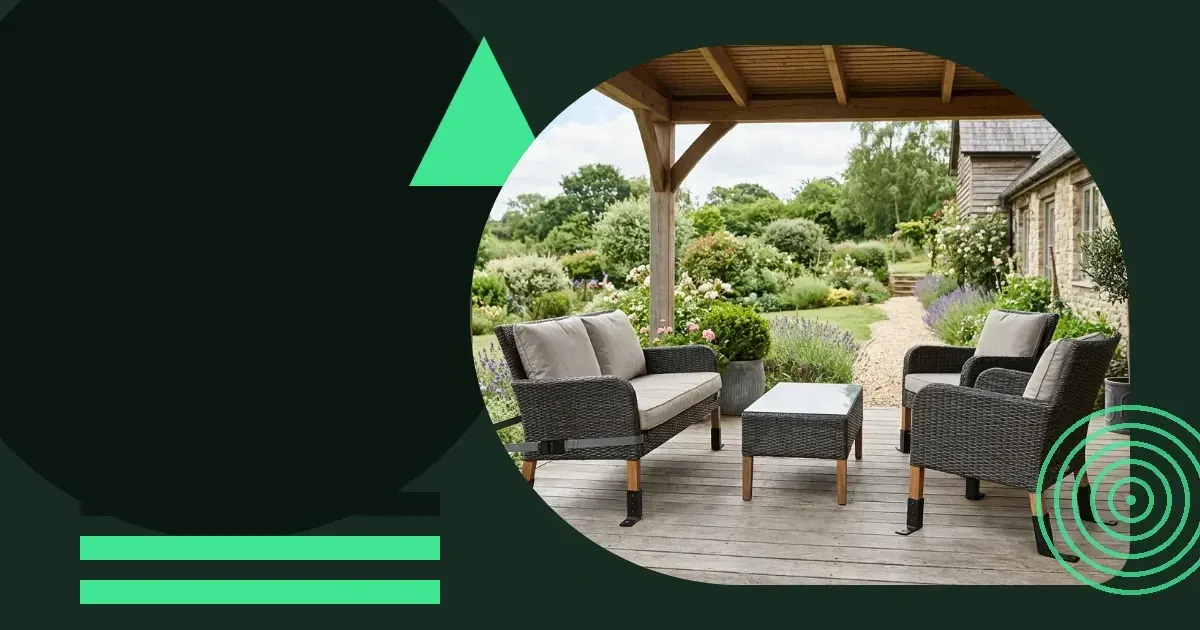
Ground anchors screw into soil or slot between paving slabs. A metal loop sits flush with the surface and you run a strap or cable from the loop to the furniture frame. Tighten the strap until the furniture cannot lift, but leave enough slack that it does not distort the legs.
For decking, use eye bolts fixed into the joists beneath. Drill through the deck board, find solid timber below and drive the bolt home. Attach a bungee cord or ratchet strap from the eye to a chair rung or table stretcher. Check the tension after the first storm; new straps settle and may need adjustment.
Cable locks work like bicycle locks. Thread coated steel cable through chair backs or table legs and loop it around a veranda post. Lock the ends together and pocket the key. This method suits furniture you want to leave out for weeks without moving.
Furniture stacking and storage routines
- Stack chairs seat-to-seat and tie the stack together with a strap before wind arrives.
- Fold tables if they hinge, then lean them against the house wall under the veranda roof.
- Move lightweight pieces into a shed or garage when a weather warning goes out.
- Cover stacked furniture with a tarpaulin weighted at the corners, so wind cannot peel it back.
- Store cushions indoors every evening; damp fabric adds weight but wind still catches the bulk.
A storage bench on the veranda holds cushions and smaller items. The bench itself is heavy enough to stay put, and you keep everything tidy without trips indoors. Look for a model with a lid that latches shut so wind cannot flip it open.
Choosing furniture that resists wind
Low-backed chairs and armless designs present less surface to the wind. A dining chair with a solid seat and short back stays down better than a lounger with a tall, angled rest.
Slatted seats and backs let wind pass through instead of catching it. Timber or metal slats reduce lift and work better on exposed verandas than solid panels. You lose some comfort but gain stability.
Built-in seating fixes the problem at source. A bench attached to the veranda frame cannot move. Add hinged lids for storage beneath the seats and you solve two needs at once. Refer to methods for attaching structures to your house if you plan to anchor a bench to the wall as well as the floor.
Comparing anchor and weight solutions
| Method | Suits | Effort | Visibility |
|---|---|---|---|
| Sandbags | Light chairs, temporary use | Low | Hidden under furniture |
| Ground anchors | Fixed furniture layouts | Moderate | Flush with surface |
| Planters | Tables, corners | Low | Decorative |
| Cable locks | All furniture types | Low | Visible but slim |
Wind barriers and planting screens
A screen along the windward side of the veranda slows gusts before they reach your furniture. Trellis panels let some air through while breaking the force. Fix them to posts with brackets or set them in the ground just beyond the veranda edge.
Tall planting acts as a natural windbreak. Evergreen shrubs in large pots or a hedge behind the veranda filter wind and reduce turbulence. The effect builds over time as the plants fill out, so this is a long-term strategy rather than an immediate fix.
Glass or acrylic panels give full wind protection and keep the view open. Mount them between posts on the exposed sides. Frameless glass needs professional fitting; acrylic sheets are lighter and you can fix them yourself with edge channels and screws. For more on veranda construction, see building a veranda over decking.
Maintenance checks that prevent damage
Inspect straps and cables every few weeks. Sunlight weakens fabric over time and metal hardware can corrode. Replace worn straps before they snap in a storm. Check that ground anchors have not worked loose; soil movement and frost can lift them.
Tighten all bolts and fixings on furniture frames. A wobbly joint makes the whole piece more vulnerable to wind. Wooden furniture benefits from an annual coat of preservative, which also adds a small amount of weight as the timber absorbs it. Details on wood care are in painting a wooden pergola.
Remove debris from under and around furniture. Leaves and twigs can pile up and create pockets where wind pressure builds. A quick sweep before windy weather is due keeps airflow smooth and reduces lift.
Quick actions for an incoming storm
When a weather warning arrives, move the lightest pieces indoors first. Stack the rest together in the centre of the veranda, away from the edge. A grouped mass is harder to shift than scattered items.
Tie everything to a post or the house wall with rope or heavy-duty cord. One continuous line threaded through multiple chairs and looped around a post holds better than separate ties. Knot it tight and check there is no slack that wind can tug.
Bring cushions, throws and anything loose inside. Small objects become projectiles in high wind. Empty plant pots can tip and roll; either move them or fill them with water to add weight until the storm passes.
Furniture that stays on the veranda through a storm should be secured to a fixed point, not just weighed down.
Start securing your furniture today
You do not need to tackle every fix at once. Begin with the lightest furniture and the windiest corner.
Buy a set of ground anchors or sandbags this week. Test one method on a single chair and see how it holds through the next breezy day. Stack your chairs when you finish using the veranda each evening so it becomes routine. Check straps and fixings once a month, and move everything that can be moved when a storm warning goes out.
Download PDF: Veranda Furniture Wind Protection Checklist PDF, 30 KB
Frequently asked questions
How do you secure garden furniture on a veranda?
Use ground anchors or eye bolts fixed to the veranda structure, then attach straps or cables to the furniture frame. Alternatively, weight each piece with sandbags under the legs or place heavy planters beside them.
What is the best way to anchor veranda chairs in wind?
Screw ground anchors into the surface between paving or into soil, then run bungee cords or ratchet straps from the anchor loops to the chair frame. For decking, fix eye bolts into the joists and strap the chairs to those.
How can I stop lightweight furniture tipping over on a windy veranda?
Add ballast by placing sandbags under each leg or using furniture foot weights. Stack chairs together and tie the stack to a post, or move lightweight pieces indoors when wind is forecast.