Cleaning methods for veranda roofs: polycarbonate, glass and the 3 materials that need different care
 Save
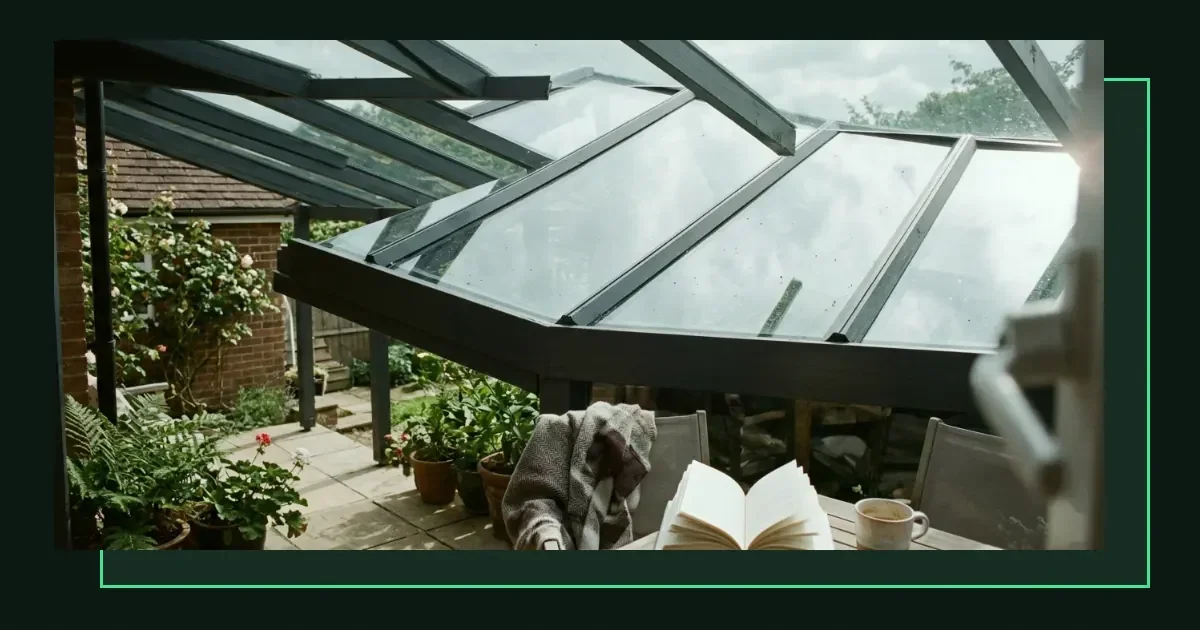
A clean veranda roof lets light through, sheds water properly and lasts longer. The method you use depends on the material: polycarbonate scratches easily, glass tolerates stronger cleaners, and corrugated metal needs a different approach entirely. Blakesleys walks you through safe cleaning for each type, plus how to remove moss and algae that build up in damp corners.
Tools and cleaning agents for veranda roofs
You need soft equipment that won't scratch. A telescopic brush with synthetic bristles reaches the roof from the ground and keeps you off a ladder. A garden hose with a spray nozzle rinses without high pressure that could lift panels or force water under seals.
For polycarbonate and glass, use washing-up liquid mixed with warm water. A bucket, a sponge and a squeegee finish the job. Avoid abrasive creams, solvents or ammonia-based window cleaners on polycarbonate—they cloud the surface or weaken the material over time.
Moss and algae need a dedicated cleaner. Choose one labelled safe for plastics and follow the dilution on the bottle. A soft brush works the solution into textured surfaces; rinsing afterwards prevents streaks.
Cleaning polycarbonate veranda roofs
Polycarbonate is lightweight and lets light through, but it scratches if you rub hard or use the wrong cloth. Start by rinsing the roof with plain water to shift loose dirt and leaves. This step stops grit dragging across the surface when you wash.
Mix a few drops of washing-up liquid into a bucket of warm water. Dip a soft sponge or microfibre cloth, wring it out and wipe the panels in long, overlapping strokes. Work from the ridge down towards the gutters so dirty water doesn't run back over clean sections.
Rinse thoroughly with the hose. Any soap left behind dries to a film that attracts more dirt. If the roof has multiwall sheets with hollow channels, tilt the spray so water runs along the channels and out through the open ends, not into them.
Dry with a clean, lint-free cloth or let the roof air-dry. Polishing brings back clarity but isn't essential—rinsing well matters more.
What not to use on polycarbonate
Skip anything abrasive: scouring pads, stiff brushes, kitchen cleaners with grit. They leave fine scratches that catch dirt and dull the material. Solvents such as white spirit, acetone or methylated spirits can soften or craze polycarbonate, and strong alkalis damage the UV coating that stops the sheets turning yellow.
Cleaning glass veranda roofs
Glass is harder than polycarbonate and tolerates stronger cleaners, but it still needs care around the seals and frame. Rinse the roof first to remove loose debris, then apply a glass cleaner or the same washing-up liquid solution you'd use on polycarbonate.
Wipe with a sponge or a window scrubber, working in sections. A squeegee pulled from top to bottom in overlapping strips leaves the glass streak-free. Wipe the blade after each pass to stop dirty water spreading.
Pay attention to the edges where the glass meets the frame. Water, leaves and algae collect in these corners. A soft brush or an old toothbrush reaches into the gaps without scratching the glass or the sealant.
Rinse and let the roof dry naturally, or wipe with a lint-free cloth if you want a polished finish. On sunny days, clean in the morning or late afternoon—direct sun dries the cleaner too fast and leaves streaks.
Removing moss and algae from veranda roofs
Moss grows where the roof stays damp and shaded, often along the lowest edge or under overhanging branches. Algae form a green or black film that turns slippery when wet. Both hold moisture against the roof and can block drainage channels.
Brush off loose moss with a soft-bristled broom before you wash. Don't scrape with anything metal—it will scratch polycarbonate and can chip glass. For stubborn patches, apply a moss and algae remover diluted as the label directs. Let it sit for the recommended time, then scrub gently with a soft brush.
Rinse thoroughly. Any cleaner left on the roof can leave a residue or harm plants below if it drips. If moss returns every season, trim back overhanging branches to let more light reach the roof and improve airflow.
Preventing moss and algae
Regular rinsing stops spores settling. Twice a year is enough for most roofs; more often if you're under trees. Keep gutters clear so water doesn't overflow and sit on the panels. A well-ventilated veranda dries faster after rain, which makes it harder for moss to take hold.
Cleaning corrugated metal and other roofing materials
Corrugated metal sheets—steel or aluminium—need less care than polycarbonate but still benefit from a wash. Use the same washing-up liquid solution and a soft brush to scrub along the ridges and valleys. Rinse well to stop soap dulling the finish.
Check for rust spots while you clean. Small patches can be wire-brushed, primed and painted before they spread. On roofs made from other materials, such as bitumen-coated sheets or tinted PVC, follow the maker's cleaning advice if you have it. Most tolerate mild detergent and a soft brush.
Step-by-step cleaning for any veranda roof
- Clear the roof of leaves and debris. Use a soft broom or rinse with a hose to shift loose material before you start washing.
- Mix your cleaning solution. Washing-up liquid in warm water works for most roofs; dilute a specialist cleaner for moss or algae if needed.
- Wash in sections from top to bottom. Apply the solution with a sponge or soft brush, working in overlapping strokes so no area is missed.
- Rinse thoroughly with clean water. Remove all soap and cleaner residue, paying attention to edges, seals and gutters.
- Dry or leave to air-dry. Wipe down with a lint-free cloth for a polished finish, or let the roof dry naturally if the weather is fair.
How often to clean a veranda roof
Twice a year keeps most roofs in good condition: once in spring after winter debris has settled, and again in autumn before the wet months. Roofs under trees or in damp, shaded spots may need cleaning more frequently to stop moss building up.
In practice, clean whenever you notice a film of dirt or algae, or when the roof stops shedding water cleanly. Waiting until moss has formed makes the job harder and increases the chance of scratching the surface.
Safety and access
Work from the ground wherever possible. A telescopic brush and a long-handled squeegee let you reach most veranda roofs without climbing. If you must use a ladder, set it on firm, level ground and have someone hold it while you work.
Don't walk on polycarbonate or glass roofs—they're not load-bearing. Even corrugated metal can dent or shift under weight. If the roof is too high or steep to clean safely, hire a professional with the right equipment and insurance.
Maintaining the roof between cleans
Rinse the roof after storms or high winds to remove leaves and grit before they stick. Check seals and fixings each time you clean—splits in the sealant or loose screws let water in, and catching them early avoids bigger repairs later.
If the roof is attached to the house, inspect the join where the ledger board meets the wall. Water trapped here can damage both the roof and the wall. For more on that join and how to keep it watertight, see how to attach a veranda securely.
| Material | Safe cleaners | Avoid |
|---|---|---|
| Polycarbonate | Washing-up liquid, moss remover (plastic-safe) | Abrasives, solvents, ammonia, scouring pads |
| Glass | Glass cleaner, washing-up liquid | Metal scrapers on seals, abrasive pads |
| Corrugated metal | Mild detergent, soft brush | Wire brushes on painted surfaces |
| Bitumen or PVC | Mild detergent | Strong solvents, high-pressure washers |
Starting your veranda roof cleaning routine
Pick a day when the weather is dry but not too bright. Gather your tools and check you can reach the whole roof safely. Start with a rinse to see how much dirt has built up, then decide whether you need a full wash or just a quick scrub of the problem areas.
Set a reminder for the next clean—spring and autumn work for most people. A routine keeps the roof clear, lets light through and means each clean takes less time than the last.
Frequently asked questions
How do you clean a polycarbonate veranda roof?
Rinse with plain water first, then wash with a soft sponge and washing-up liquid diluted in warm water. Rinse thoroughly and dry with a lint-free cloth. Avoid abrasive cleaners, solvents and stiff brushes that can scratch or damage the surface.
What removes moss from a veranda roof?
Brush off loose moss with a soft broom, then apply a moss and algae remover safe for plastics. Let it sit as directed, scrub gently with a soft brush and rinse well. Trim overhanging branches to reduce future growth.
Can you use a pressure washer on a veranda roof?
It's not recommended. High pressure can lift panels, force water under seals or scratch polycarbonate. A garden hose with a spray nozzle gives enough force to rinse without causing damage.