Veranda roofing materials: polycarbonate, glass and three sheeting options
 Save
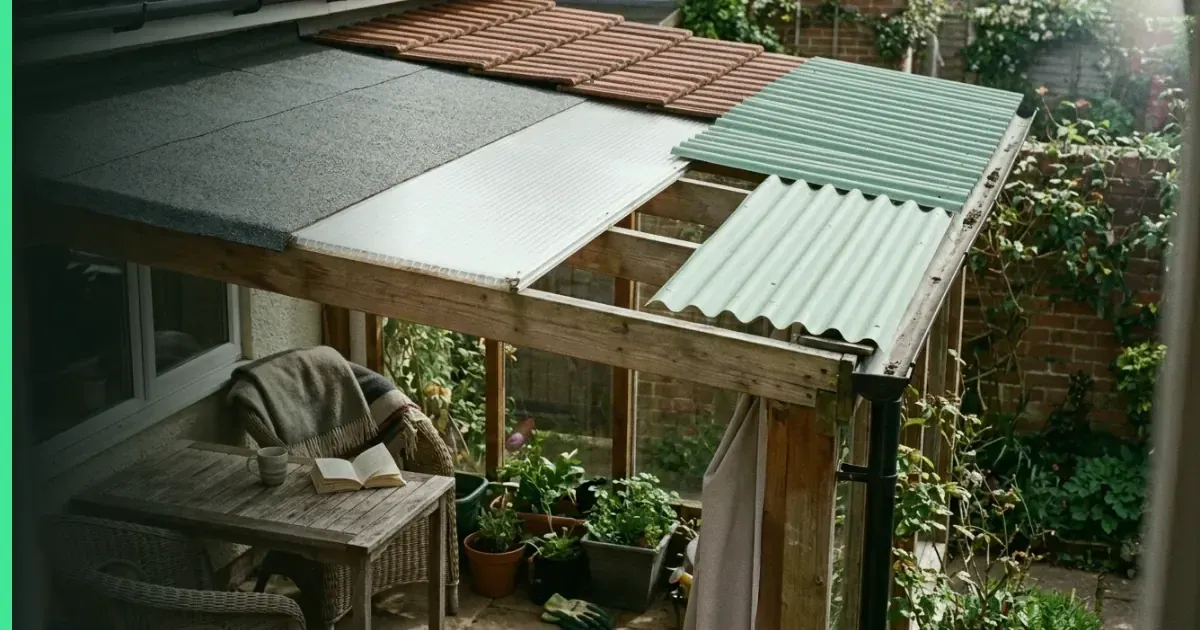
A veranda roof protects your garden space from rain and sun, and the material you choose shapes how much light comes through, how loud the rain sounds and how long the roof lasts. The main choices are polycarbonate, glass and corrugated sheeting, each with different strengths. Below you will find what each material offers, how it performs and where it works best, so you can pick the right one for your Blakesleys veranda project.
Polycarbonate sheets
Polycarbonate is a lightweight plastic that comes in clear, tinted or opaque sheets. It lets light through while blocking heat, and it bends slightly under impact rather than shattering. Multiwall sheets have air pockets between two or three layers, which improves insulation and reduces weight further.
Light transmission sits between clear glass and opaque sheeting. A clear polycarbonate sheet passes most daylight through, while bronze or grey tints cut glare and heat without making the space too dim. Opal or frosted finishes diffuse light evenly, which suits verandas next to bright south-facing walls.
Durability is good: polycarbonate resists cracking from hail or fallen branches, and UV-resistant coatings stop the sheet turning yellow over time. Expect a serviceable life of around a decade before clarity starts to fade. Rain on multiwall sheets sounds softer than on single-layer materials because the air pockets dampen the noise.
Installation and weight
Polycarbonate weighs less than glass, so the supporting frame does not need heavy beams. You can cut sheets with a fine-tooth saw and fix them with screws through pre-drilled holes. Expansion and contraction matter: leave a small gap around each edge to let the sheet move as temperature changes, or it will buckle.
Glass panels
Glass brings clarity and permanence. Toughened or laminated glass is the safe choice for a veranda roof: toughened glass shatters into blunt crumbs if it breaks, while laminated glass holds together because a plastic interlayer binds the fragments.
Light transmission is higher than polycarbonate. Clear glass passes daylight through without distortion, which makes the veranda feel like an extension of the garden. Tinted glass cuts heat and glare, and self-cleaning coatings use sunlight and rain to break down dirt, which reduces how often you need to wipe the panels.
Weight and cost are the trade-offs. Glass is heavier than polycarbonate, so the frame needs stronger posts and beams. The material itself costs more, and installation takes longer because each panel must be handled carefully. Rain on glass is louder than on multiwall polycarbonate, though the sound is crisper and less drumming than on metal sheeting.
Longevity
Glass lasts decades without yellowing or losing transparency. Scratches are rare, and the surface stays smooth, so moss and algae wash off more easily than from textured materials. If a panel does crack, you replace that one piece rather than the whole roof.
Corrugated sheeting
Corrugated sheets—made from PVC, fibreglass or coated steel—are the budget-friendly option. The ridged profile adds strength, so the sheets span longer distances without sagging. Clear PVC and fibreglass let light through; steel sheets are opaque and suit verandas where full shade matters more than daylight.
Light depends on the material. Clear PVC passes daylight but distorts the view because the corrugations scatter the light. Fibreglass sheets often have a slight green or amber tint. Translucent finishes give you brightness without full transparency, which works well over a seating area where you want shelter without a cave-like feel.
Noise is the main drawback. Rain on corrugated sheeting is loud, especially metal, and the sound carries into the house if the veranda sits against a wall. Soft furnishings and climbing plants around the frame absorb some of the noise.
Fixing and maintenance
Corrugated sheets fix to timber or metal purlins with roofing screws and sealing washers. Overlap the sheets by at least one corrugation at the sides and one ridge at the ends to keep water out. PVC and fibreglass sheets become brittle over time, and UV exposure weakens them faster in bright spots. Steel sheets rust if the coating chips, so check for scratches after installation and touch them up with primer.
Material comparison
| Material | Light transmission | Weight | Rain noise | Typical lifespan |
|---|---|---|---|---|
| Polycarbonate multiwall | Good, with heat reduction | Light | Moderate | Ten years |
| Toughened glass | Excellent | Heavy | Loud, crisp | Decades |
| PVC corrugated | Fair, distorted | Very light | Very loud | Five to eight years |
| Coated steel | None | Medium | Very loud | Fifteen years with care |
Choosing by situation
Pick polycarbonate when you want a balance of light, cost and ease of installation. It suits DIY projects and verandas where weight is a concern, such as those fixed to older walls or sitting on shallow foundations. Tinted sheets work well on south-facing verandas where glare is a problem.
Choose glass for a veranda that feels like a permanent part of the house. The clarity and long life justify the higher cost if you plan to stay in the property. Glass suits quiet gardens where rain noise matters less, or where the veranda opens directly into a living room and you want an unbroken view.
Go for corrugated sheeting when budget or speed matters most, or when the veranda sits away from the house and noise is not a concern. Steel sheets suit storage areas or potting sheds more than sitting spaces. Clear PVC works over a patio where you need rain cover but do not mind a bit of distortion.
Steps to choose your material
- Measure the span between the beams: longer spans need stiffer materials or closer purlin spacing.
- Work out how much natural light you want under the veranda: full daylight, diffused brightness or complete shade.
- Check the frame: a lightweight timber structure suits polycarbonate or PVC; a heavier frame with deeper beams can take glass.
- Consider rain noise: if the veranda sits against a bedroom or living room, avoid metal sheeting.
- Set a budget that covers the material, fixings and any frame reinforcement the weight demands.
Supporting the roof
Every roofing material needs adequate support. Polycarbonate and PVC sheets flex slightly, so purlins should sit no more than sixty centimetres apart to stop sagging. Glass panels need a frame designed for their weight: posts must be thicker and footings deeper than for a lighter roof. Steel sheeting spans further because of the corrugated profile, but the frame still needs to be level and square, or the sheets will not align properly.
Expansion matters for all materials. Polycarbonate and PVC move more than glass as temperature changes, so leave a small gap at the edges and use screws with rubber washers that let the sheet shift without splitting. Glass panels sit in glazing bars or clips that hold them firmly while allowing for slight movement.
Pitch and drainage
A veranda roof needs a slight slope to shed water. Aim for at least a ten-degree pitch: shallower angles let water pool, which stains polycarbonate and encourages moss on glass. Corrugated sheets can handle a lower pitch because the ridges guide water down, but steeper is always safer. Make sure guttering sits at the low end to catch the runoff, or water will spill onto the decking and soak the posts.
Maintenance over time
Polycarbonate sheets need washing twice a year with warm water and a soft cloth. Avoid abrasive cleaners, which scratch the surface and let dirt stick. Check the seals around the edges: if they crack, water can seep in and cause the multiwall pockets to fill with algae.
Glass stays cleaner longer, especially with a self-cleaning coating, but you still need to wipe bird droppings and pollen off before they bake on in summer. Inspect the glazing bars for cracks, and reseal any gaps with silicone.
Corrugated sheeting collects moss in the troughs if the veranda sits under trees. Scrub it off with a stiff brush, and check the fixings: screws work loose over time, and a sheet that flaps in the wind will crack at the holes. Touch up any scratches on steel sheeting before rust takes hold.
What else to think about
Planning permission rarely applies to a veranda roof if the structure stays under permitted development limits, but check with your local authority if the veranda sits close to a boundary or if you live in a conservation area. For more on the rules, see our guide to planning permission for a veranda.
Colour matters for how much heat builds up underneath. Clear materials let the most light through but also the most heat, which makes the space uncomfortably warm on a July afternoon unless you add shade cloth or climbing plants. Bronze or grey tints cut heat without blocking too much daylight. Opal finishes stay cooler than clear sheets because they scatter the light before it reaches the floor.
If you are adding a roof to an existing structure, check the posts and beams can take the extra weight. Glass in particular may need reinforcement, and older timber should be inspected for rot before you load it further. For advice on retrofitting a roof, see our article on adding a roof to your pergola.
Download PDF: Veranda roofing material checklist PDF, 28 KB
Frequently asked questions
What is the cheapest veranda roofing material?
Clear PVC corrugated sheeting is the cheapest option. It lets light through and is easy to cut and fix, though it yellows and becomes brittle after a few years. Coated steel sheeting costs a bit more but lasts longer if you keep it free of rust.
How long does polycarbonate roofing last on a veranda?
Polycarbonate with a UV-resistant coating lasts around ten years before it starts to yellow or lose clarity. Multiwall sheets hold up better than single-layer ones because the air pockets reduce stress from expansion. Clean it twice a year to get the full lifespan.
Is glass or polycarbonate better for a veranda roof?
Glass gives better clarity and lasts decades, but it costs more and weighs more, so the frame needs to be stronger. Polycarbonate is lighter, cheaper and easier to install, and multiwall sheets insulate better, though the material yellows over time. Pick glass for a permanent feel and polycarbonate for a lighter structure or a tighter budget.