Shade from a pergola: what the frame gives and 4 ways to add more
 Save
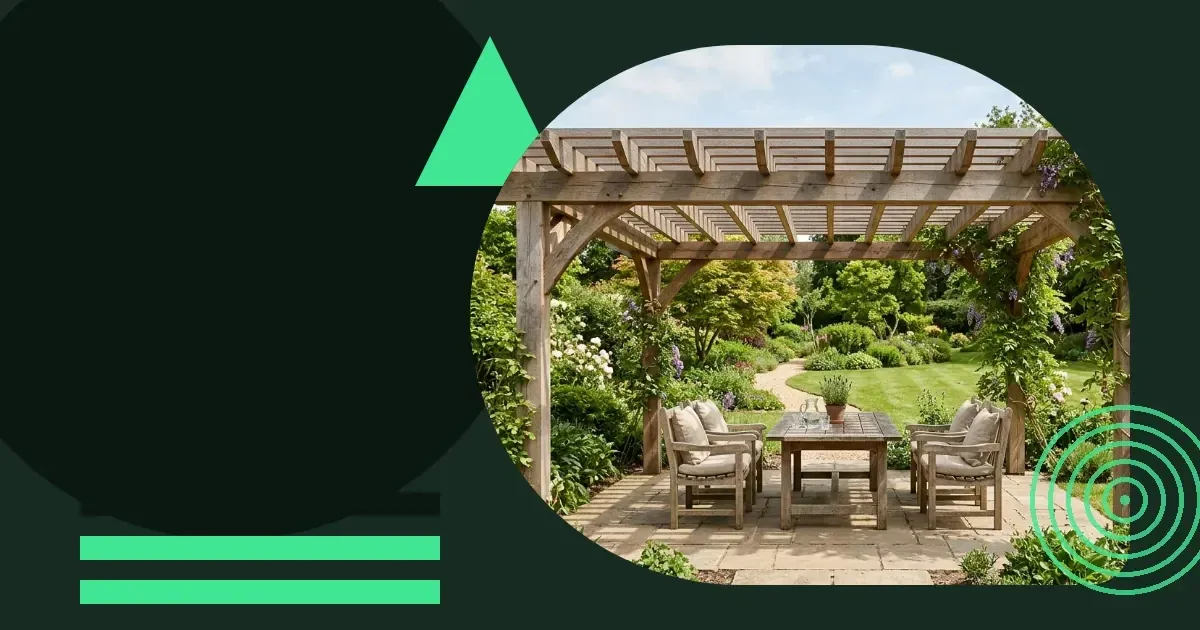
A traditional pergola with open rafters provides dappled shade, not complete cover. The beams and cross-pieces block some sunlight, but most of it reaches the ground in shifting patterns as the sun moves. You get partial protection—enough to soften glare and cool the space slightly, but not enough to sit under in full midday sun without additional measures. This guide explains how much shade the structure itself delivers, what increases coverage, and the materials and methods that suit different needs. Blakesleys covers garden structures built to work with the British climate.
How much shade an open pergola gives
The amount depends on rafter spacing and orientation. Rafters set closer together—say, every thirty centimetres—cast more shadow than those placed sixty centimetres apart. A pergola running east to west throws its longest shadows in the morning and late afternoon, when the sun is low. At midday, when the sun is highest, an open frame offers the least protection.
On a bright summer day, expect roughly a quarter to a third of the area beneath to be shaded at any one time. The rest receives direct light. The shade moves as the day progresses, so no spot stays covered continuously. If you want to sit outdoors without moving your chair every hour, the frame alone will not do the job.
Fabric canopies and retractable covers
A canvas or sailcloth canopy draped across the rafters increases shade immediately. Stretch the fabric taut and secure it with hooks or ties at each corner. Removable covers let you roll them back on overcast days or store them before winter storms. Outdoor-grade fabric resists fading and mildew, but expect to replace it every few years as British rain and UV exposure take their toll.
Retractable awnings—mounted on tracks or roller systems—offer more control. You pull the cover out when the sun is strong and retract it when you want open sky. They cost more than fixed cloth, and the mechanism requires occasional maintenance to prevent jamming. Both options suit freestanding and lean-to designs equally well.
Choosing fabric weight and colour
Heavier canvas blocks more light but sheds rain poorly and stays damp longer. Lighter sail fabric dries faster and lets a little breeze through, though it offers less protection in a downpour. Pale colours reflect heat; dark shades absorb it and can make the space underneath warmer. Neutral tones—stone, sand, charcoal—hide dirt better than white.
Slatted roofing and louvred panels
Fixed timber slats, laid across the rafters at intervals, give permanent partial cover. Space them closely for deeper shade or leave gaps for more light. The slats add architectural definition and require no seasonal removal, though they collect moss and need cleaning once or twice a year. Painting or staining them extends their life and lets you match the pergola's frame.
Adjustable louvres—horizontal slats that tilt on a pivot—let you control the angle. Closed, they block most sunlight; open, they allow ventilation and a view of the sky. Louvre systems are heavier and more expensive than fixed slats, and the hinges can seize if not oiled regularly. They suit larger pergolas where the cost and effort justify the flexibility.
Climbing plants for natural cover
Training plants up the posts and across the rafters creates living shade that thickens over seasons. Wisteria, jasmine, grapevines and climbing roses all work, though they grow at different speeds and need different amounts of pruning. Wisteria, for example, grows vigorously and can cover a pergola in two to three summers, but its weight stresses lighter frames if not trimmed back.
Plants take time to establish. In the first year, expect little coverage. By the second or third season, the canopy becomes dense enough to block a meaningful amount of sun. Deciduous climbers drop their leaves in autumn, so you lose shade in winter—an advantage if you want more light during darker months, a drawback if you use the pergola year-round.
Maintenance and support
Check that posts and beams can bear the plant's mature weight. Vigorous climbers like wisteria need strong timber or steel; lighter frames suit annual vines such as morning glory. Prune in late winter to prevent tangling and to keep growth within the structure. Plants need watering during dry spells, especially in the first two years, and occasional feeding to encourage healthy foliage.
Polycarbonate and corrugated roofing sheets
Clear or tinted polycarbonate sheets, screwed directly onto the rafters, provide waterproof cover and full shade where the panels sit. They let light through—useful if you want brightness without direct sun—but they trap heat underneath on warm days. Corrugated metal sheets block more light and heat less, though they make noise in heavy rain.
Both materials change the pergola's character. A structure with a solid roof becomes a covered terrace rather than an open frame, which may affect planning rules if the pergola is large or sits close to a boundary. Sheets need securing firmly—high winds can lift poorly fastened panels, and torn roofing is harder to patch than torn fabric.
Adding shade without changing the structure
- Freestanding parasols or umbrellas placed beneath the pergola give targeted shade where you sit. Move them as the sun shifts, and fold them away when not in use.
- Bamboo or reed screening laid across the top provides quick, cheap cover. Tie it down with garden twine. It lasts a season or two before needing replacement.
- Shade sails tensioned above the pergola—anchored to posts or nearby walls—add a second layer without touching the rafters. They work well over large areas.
- Outdoor curtains hung from the sides let you close off sections when the sun is low. They offer privacy as well as shade, and you can open them fully on cooler days.
Comparing shade options
| Method | Coverage | Upkeep | Weather protection |
|---|---|---|---|
| Fabric canopy | Full where draped | Replace every few years | Light rain only |
| Timber slats | Partial, fixed | Clean and treat annually | None |
| Climbing plants | Increases over time | Prune and water regularly | None |
| Polycarbonate sheets | Full where fitted | Wash twice a year | Rain and UV |
Choosing by what you need the space for
If you eat outdoors and want reliable cover for a table, go with a fixed canopy or sheets. Dining in dappled light is pleasant for an hour, less so when plates and glasses heat up in full sun. If the pergola frames a seating area where you move around, plants or slats suit better—they soften the light without the enclosed feel of a solid roof.
For a structure that stays attractive in winter, choose an option that does not need removing. Slats, louvres and evergreen climbers look deliberate year-round. Fabric and reed screening, by contrast, often end up rolled in a shed from October to April. Think about storage space before you buy something that needs taking down.
Practical points for installation
Secure any added material firmly. Wind lifts loose fabric and can tear it free, and heavy rain collects in sagging canopies, stressing fixings. If you are attaching sheets or slats, check that the rafters are strong enough to carry the extra weight. Undersized timber sags or splits under load, especially after a wet winter when wood swells.
Consider drainage. A pergola with full roofing needs guttering if it sits over paving or decking, otherwise water pours off the edge and pools underneath. An open structure or one with gaps between slats drains naturally, though the ground beneath will still get wet. If you are planting climbers, position them where rain reaches their roots—tight against a wall, they may dry out.
Steps to add shade this week
- Measure the pergola's length and width at the rafters to know how much material you need.
- Decide whether you want removable or permanent cover based on how you use the space in winter.
- Buy outdoor-grade fabric, treated timber slats or polycarbonate sheets suited to British weather.
- Attach the material with rust-proof fixings—stainless steel screws for sheets, galvanised hooks for fabric.
- Test the installation in light rain to check for leaks or sagging, and adjust tension or support as needed.
Balancing light, rain and appearance
The best solution depends on how much sun the spot gets and what you can live with aesthetically. A pergola's open design is part of its appeal; turning it into a fully enclosed box loses that character. Dappled shade suits many garden activities—reading, potting plants, casual meals—without making the space feel closed off. If you need full protection, consider whether a veranda or gazebo would serve you better than a heavily modified pergola.
Whatever you add, keep it in proportion to the frame. Thick roofing on slender posts looks unbalanced, and overloading the structure shortens its life. A pergola gives enough shade for comfort once you understand what the open frame does and where to supplement it.
Download PDF: Pergola Shade Planning Checklist PDF, 29 KB
Frequently asked questions
What is the main difference between shade from a pergola and shade from a gazebo?
A pergola with open rafters gives dappled, shifting shade that moves with the sun, covering roughly a quarter to a third of the area at any time. A gazebo has a solid or near-solid roof that provides complete, fixed shade across the whole footprint.
How do you increase shade on a pergola without blocking all the light?
Fit widely spaced timber slats across the rafters, or train deciduous climbing plants up the posts. Both methods let some sunlight through while increasing coverage. Adjustable louvres give more control, allowing you to tilt the slats open or closed.
What type of fabric works best for a pergola canopy in the UK?
Outdoor-grade canvas or sailcloth rated for UV and mildew resistance. Lighter fabrics dry faster after rain but offer less protection; heavier canvas blocks more sun but stays damp longer. Neutral tones hide dirt better than white.
How long does it take for climbing plants to provide useful shade on a pergola?
Expect little coverage in the first year while the plant establishes. By the second or third season, vigorous climbers like wisteria or grapevines form a dense canopy. Growth speed depends on the species, soil quality and how much you prune.
Do polycarbonate sheets on a pergola count as a roof for planning purposes?
They can do. A solid covering changes the structure's classification, which may affect permitted development limits, especially if the pergola is large or near a boundary. Check local rules before fitting waterproof roofing.
Can you combine different shade methods on one pergola?
Yes. Many people fit slats or fabric over part of the structure and leave the rest open, or train plants up the sides while using a canopy on top. Mixing methods lets you tailor coverage to different zones—full shade over seating, lighter cover elsewhere.