Training plants over a pergola: climbers, fixing and the 4 steps that work
 Save
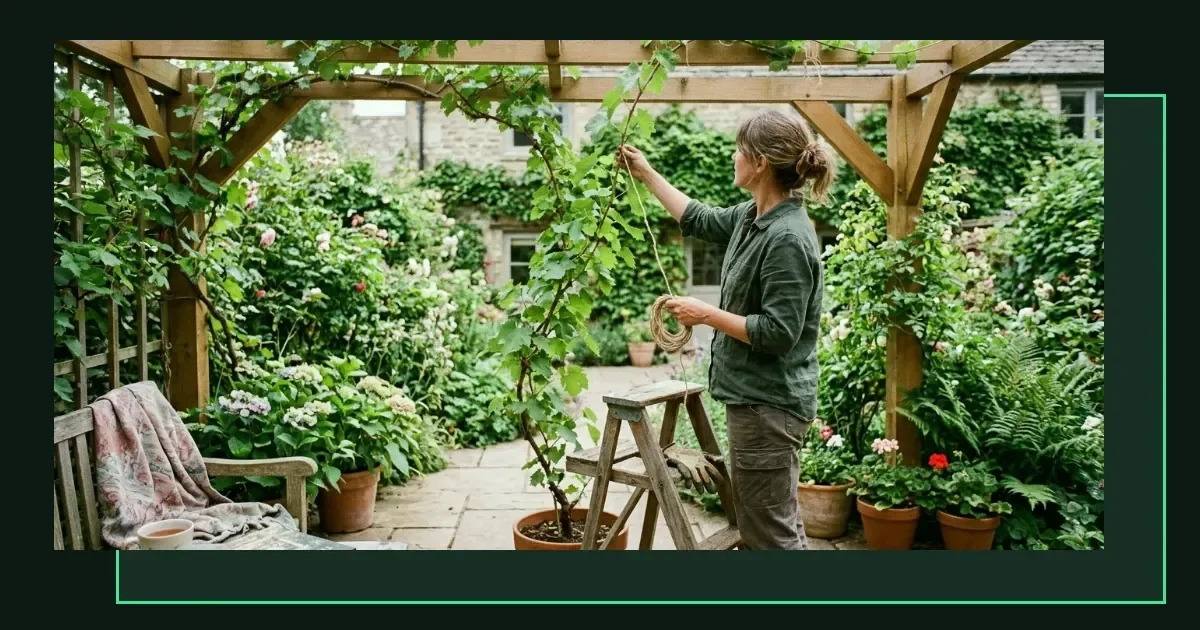
Training plants over a pergola turns bare timber into living shelter. You plant climbers at the base, guide their stems onto the frame and tie them as they grow. The result is shade, scent and flowers overhead. Blakesleys walks you through choosing the right species, planting them where they'll thrive and fixing stems so they climb without damage.
Choosing climbers for pergola structures
Pick plants that suit your pergola's height and the amount of sun it gets. Wisteria works on tall, sturdy frames in full sun. Clematis suits smaller structures and tolerates partial shade. Climbing roses need strong horizontal rails and at least six hours of direct light.
Check the plant's mature weight. Wisteria becomes heavy after a few years and needs thick posts and beams. Jasmine stays lighter and grows well on thinner timber. Honeysuckle sits between the two.
Deciduous climbers lose their leaves in winter, leaving the pergola open. Evergreen climbers such as star jasmine keep cover year-round but block more light in summer.
Planting at the base of posts
Dig a hole twice the width of the plant's root ball, thirty centimetres from the post. Loosen the soil at the bottom so roots can spread. Mix the removed soil with compost or well-rotted manure.
Take the plant out of its pot and tease the roots apart if they're circling. Place it in the hole so the top of the root ball sits level with the ground. Backfill with the soil mix, firm it gently and water thoroughly.
Lean a cane from the root ball to the post to bridge the gap. Tie the plant's stems to the cane with soft twine. This guides early growth towards the frame.
Fixing stems to timber safely
Use soft garden twine, plant ties or strips of cloth. Wire damages bark as stems thicken. Tie stems loosely in a figure-of-eight: one loop around the stem, one around the beam, with a twist between them. This stops the stem rubbing directly against the wood.
Check ties every few months. Stems grow quickly in spring and summer. A tie that was loose in March can cut into bark by June. Loosen or replace any that look tight.
Spread stems horizontally along crossbeams before letting them climb upwards. Horizontal growth encourages flowering along the whole length. Wisteria and climbing roses flower better when trained this way.
Where to tie on the frame
Start tying at the lowest crossbeam. Once stems reach it, guide them along it in both directions. When side shoots appear, train some of them upwards to the next beam.
Avoid bunching all the stems in one place. Space them evenly across the pergola so foliage covers the whole structure. This takes longer but gives better shade and a more balanced look.
Step-by-step training from planting to cover
- Plant the climber thirty centimetres from the post, water it in and lean a cane from root ball to frame.
- Tie the longest stems to the cane as they grow, then onto the lowest beam once they reach it.
- Guide stems horizontally along crossbeams, tying every thirty to forty centimetres with loose figure-of-eight knots.
- Train side shoots upwards to the next level of beams, spacing them so the pergola fills evenly.
- Check ties every two to three months during the growing season and loosen any that have tightened as stems thickened.
Growth rates and what to expect
Fast-growing climbers such as Russian vine and mile-a-minute can cover a pergola in two seasons, but they need frequent cutting back. Wisteria takes longer to establish but grows vigorously once settled. Clematis fills gaps more slowly and suits gardeners who want gradual cover.
Most climbers grow faster in their second and third years. Feed them in early spring with a general-purpose fertiliser and mulch around the base to hold moisture. Water during dry spells, especially in the first two summers.
Managing excess growth
Prune climbers after flowering or in late winter, depending on the species. Wisteria needs two cuts a year to keep it in check and encourage flowers. Honeysuckle tolerates a hard cut if it outgrows the frame. Clematis pruning depends on the variety, so check the plant label.
Remove stems that grow away from the pergola or trail onto the ground. Cut out dead or damaged wood whenever you spot it. This keeps the plant healthy and directs energy into the parts you want.
Common climbers and how they behave
| Climber | Light needs | Growth habit | Pruning time |
|---|---|---|---|
| Wisteria | Full sun | Twining, heavy | Summer and winter |
| Clematis | Sun or part shade | Leaf stalks grip | Varies by type |
| Climbing rose | Full sun | Needs tying, thorny | Late winter |
| Honeysuckle | Sun or part shade | Twining, scented | After flowering |
| Star jasmine | Sun or part shade | Twining, evergreen | After flowering |
Avoiding damage to the pergola
Heavy climbers can pull on fixings and loosen joints over time. Check that posts are firmly anchored before planting anything vigorous. If you're building from scratch, read about pergola foundations to make sure the base can take the load.
Wisteria stems thicken into woody trunks that can warp thin timber. Use beams at least ten by ten centimetres if you're planting wisteria. Lighter climbers such as clematis and jasmine suit smaller frames.
Trapped moisture between dense foliage and timber encourages rot. Leave gaps in the planting so air can circulate. If rot is a concern, timber treatment and protection steps reduce the risk.
Training on freestanding vs attached pergolas
Freestanding pergolas let you plant all the way round. Train climbers up each post and across the beams to create a room of foliage. This works well in the middle of a lawn or patio.
Attached pergolas have one side against the house. Plant climbers on the outer posts and train them back towards the wall. This pulls the eye outwards and keeps growth away from windows and gutters. For wall fixing and waterproofing detail, see attaching a veranda to your house.
Shade and the balance between cover and light
Dense climbers such as grapevine and Virginia creeper block most of the light. They suit pergolas over seating areas where you want full shade in summer. Lighter climbers such as clematis let dappled light through and work better over paths or near windows.
Prune harder if a pergola becomes too dark. Thinning stems rather than shortening them keeps the shape but opens up the canopy. You can also train growth to one side, leaving part of the pergola open.
For structures built mainly for shade, combining climbers with roofing gives faster results. Pergola shade options compares plants, fabric and solid covers.
Starting now
You don't need to wait for perfect conditions. Plant container-grown climbers any time the ground isn't frozen. Tie in what's already there and add more ties as stems lengthen.
- Buy a climber that suits your pergola's light and size, and plant it thirty centimetres from a post.
- Tie stems loosely to a cane, then onto the lowest beam as they reach it.
- Spread growth horizontally before training it upwards, spacing stems evenly across the frame.
- Check ties every few months and loosen any that have tightened as the plant thickens.
#Climbing plants #Posts #Beams #Maintenance
Download PDF: Pergola climber training checklist PDF, 28 KB
Frequently asked questions
What are the best climbing plants for a pergola?
Wisteria suits tall, sturdy pergolas in full sun and produces hanging flowers. Clematis works on smaller frames and tolerates partial shade. Climbing roses need strong horizontal rails and at least six hours of direct sunlight. Honeysuckle and star jasmine both twine well and grow in sun or part shade.
How do you grow wisteria on a pergola?
Plant wisteria thirty centimetres from a post in full sun. Tie stems loosely to the frame as they grow, training them horizontally along beams before letting them climb upwards. Prune twice a year—once in summer and once in winter—to control growth and encourage flowering. Make sure the pergola has thick posts and deep foundations, as mature wisteria becomes very heavy.
How do you tie climbing plants to a pergola?
Use soft garden twine or cloth ties, never wire. Tie stems in a figure-of-eight: one loop around the stem, one around the beam, with a twist between them. This keeps the stem from rubbing directly on the wood. Check ties every few months and loosen any that have tightened as the plant grows.